Free English learning hub
Learn English words the clear, friendly way
Meanings, example sentences, grammar notes and word lists, all checked against trusted dictionaries and written for learners, kids, parents and teachers.
Popular: Sentences Adjectives Confused words Idioms
- 30,000+free guides
- 27,800+words in a sentence
- 1,000+adjective lists
- 600+confused-word pairs
Explore the learning hubs
Pick a hub to start. Every guide explains the meaning, shows real example sentences and points out common mistakes.
 Words in a SentenceSee how a word works in real sentences, with grammar and tone notes.27,800+ guides →
 GrammarNouns, verbs, adjectives, adverbs, pronouns, prepositions and punctuation.Start with the basics →
 Adjectives & VocabularyDescribing words for people, places, feelings and everyday things.1,000+ word lists →
 Confused WordsAffect or effect? Absence or absents? Clear side-by-side comparisons.600+ comparisons →
 Idioms & ExpressionsWhat everyday English expressions really mean and when to use them.Explore idioms →
 Kids CornerFun word lists about cartoons, Disney, anime, colours and candies.Play & learn →
Start here: choose your path
English learners
Build confident, natural English one word at a time.
Kids & parents
Colourful, friendly word lists that make reading time fun.
Teachers & tutors
Ready-to-use examples, tables and common-error notes for lessons.
Turn reading into real progress with free English tools
Learning is easier when you can try a rule for yourself. Use the writing calculator to count words and check sentence length, explore repeated vocabulary, or test your grammar with explanations you can learn from.
Example preview · your real results update on the tool page
Word & reading-time counter
See words, characters, paragraphs, average sentence length and estimated reading or speaking time. Edit your writing while the numbers change.
Open the calculator →Find repeated words
Discover the words you rely on most and decide whether a more precise noun or adjective would make your message clearer.
Explore word frequency →Grammar quiz with feedback
Answer twelve short questions about English grammar and word choice. Every answer includes a helpful explanation and you can review mistakes.
Take the quiz →
Confused words
More →- Beau vs Bow: Meanings and Pronunciation
- Whining vs Wining: Differences and Examples
- Cense vs Cents vs Scents vs Sense: Differences and Examples
- Understanding the Distinctions: Pole vs Poll – Using Appropriately
- Choosing Between “Inciteful” and “Insightful”: Proper Usage and Examples
- Pupal vs Pupil: Differences and Examples
Idioms & expressions
More →- 50+ Idioms to Express Anger That You Should Know!
- Idioms for Sadness: Meanings and Example Sentences
- Happy Idioms: 75+ Idioms for Happiness or Being Happy
- Moon Idioms: Top English Idioms About The moon
- Idioms to Express Success: Popular Idioms to Talk About Your Success
- 90+ Travel Idioms: Fun Ways to Talk About Traveling and Adventures
Browse by topic
Themed word lists for school projects, writing practice and curious minds.
Learn English one useful skill at a time
Practical advice and clear examples to help you find the right lesson, remember new vocabulary and use words confidently.
What is the best way to improve your English?
There is no single method that works for every learner. Someone preparing for an examination may need careful grammar practice, while someone writing an email at work may need clear sentences and the right tone. Both learners benefit from the same basic habit: understand a word or rule, see how it works, and then use it in a sentence of your own.
Start with a small goal you can repeat. For example, you might learn five adjectives that describe feelings, compare two commonly confused words, or fix one grammar error in a short paragraph. You do not need to memorize a long list every day. A few words that you can actually use are more valuable than dozens you only recognize.
StartsWithY is arranged around these practical questions. If you know a word but do not know how to use it, browse our sentence examples. If two words look alike, visit confused words. If you want a more specific description, explore our adjective guides. Our grammar section explains how the pieces of a sentence fit together.
Read the sentence The room was nice. What made the room nice? Was it bright, quiet, spacious or comfortable? Replace nice with a more precise adjective: The quiet room had a large window. The second sentence gives your reader something clear to imagine.
Start at your level and keep moving
Use these paths as a flexible guide. You can return to earlier lessons whenever a new topic feels difficult.
Start with everyday English
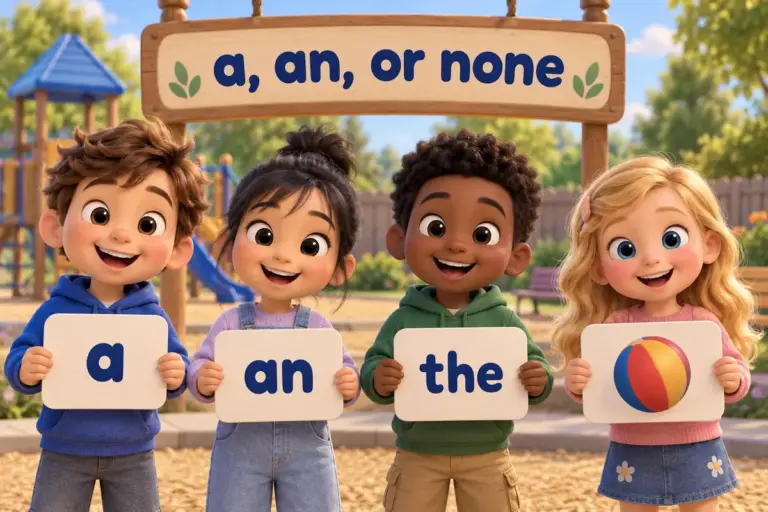
Learn common nouns for people, places and objects. Practise simple present-tense sentences, basic questions, and how articles such as a, an and the work. Read a short example and make one like it.
First goal: Write five clear sentences about your day using different verbs.
Explore grammar basics →Make your writing more natural
Compare similar words, learn useful adjectives, and notice the difference between formal and casual expressions. Pay attention to tense and to words that connect ideas, such as because, although and however.
Next goal: Explain a familiar topic in one organized paragraph.
Compare tricky words →Express ideas with precision
Work on sentence rhythm, tone, word choice and idiomatic expressions. Instead of adding difficult vocabulary everywhere, choose words that suit the reader and the situation. Edit your own paragraphs to remove confusing phrases.
Challenge: Revise one paragraph for clarity rather than length.
Understand expressions →Understand a word before trying to remember it
A vocabulary list can help you discover words, but a list alone does not tell you how to use them. When you meet a new word, pay attention to its meaning, part of speech and common companions. The noun decision, for example, often appears with the verb make: We made a decision. Saying We did a decision would sound unnatural in ordinary English.
Context also changes meaning. The adjective light can describe a room with plenty of brightness, a bag that is not heavy, or a meal that is not rich. A dictionary definition may offer several meanings, but a complete sentence shows which one is intended. That is why examples matter as much as definitions.
Learn new vocabulary in four steps
- Notice the word: Write down the sentence where you found it, not only the word itself.
- Check the meaning: Find the sense that fits the sentence. Notice whether the word is a noun, verb, adjective or adverb.
- Make a new sentence: Describe something from your life using the same meaning.
- Review later: Try using the word again without looking at your note.
For descriptive language, begin with categories that already interest you. If you enjoy writing about nature, explore flowers, animals or colors. If you are writing a message to encourage someone, our positive-words collection can provide ideas. Choose a relevant word, then test it in your own sentence.
Build clearer sentences with small, reliable rules
Grammar describes the patterns that help readers understand who is doing something, when it happened and how ideas relate. You do not need to learn every technical term before you start writing. Begin with a simple sentence: The student reads a book. The student is the subject, reads is the verb and a book is the object.
Change the time and the verb changes: The student read a book yesterday. Change the subject and the present-tense verb may change: The students read books. Notice the pattern rather than memorizing unrelated examples. When a rule seems confusing, write two or three sentences that differ in only one detail.
Articles and nouns
Use a or an for one unspecified countable thing: an apple. Use the when the listener can identify it: the apple on the table. General plurals often use no article: Apples grow on trees.
Verbs and time
Use a tense that matches your meaning. I walk describes a habit, I am walking describes an action happening now, and I walked places the action in the past.
These are starting patterns, not the complete story of English grammar. Practice with our free grammar quiz, then review the explanations for any answer that surprised you.
Small changes that make a big difference
Many mistakes happen because English has words that sound similar or rules that change with context. Instead of worrying about every possible error, practise a few common patterns until you can spot them in your own writing.
There, their and they’re
There points to a place: The bag is there. Their shows possession: It is their bag. They’re means they are: They’re waiting. Read the whole sentence to choose correctly.
Fewer and less
Use fewer with things you count individually: fewer mistakes. Use less with amounts such as less water. Everyday usage has exceptions, but this distinction is a helpful starting point.
A and an depend on sound
Write an hour because hour begins with a vowel sound. Write a university because university begins with a consonant-like y sound.
Specific writing beats vague wording
The movie was good gives little information. The story was exciting and the ending surprised me gives the reader a clearer picture. Specific words help more than simply adding adjectives.
After you learn a rule, revisit it the next day. A short review often reveals whether you understand the meaning or only recognized the answer when you saw it.
Use free tools to improve your next paragraph
Checking a statistic will not tell you whether a sentence is good, but it can help you see a pattern. A word counter is useful for assignments with length requirements. A sentence counter makes it easier to notice a paragraph made entirely of long sentences. A vocabulary analyzer highlights repeated words that may be worth reviewing.
Try writing a short explanation of how to prepare for school or how to care for a plant. Paste your paragraph into the writing calculator. If one sentence is much longer than the rest, read it aloud and decide whether the reader would benefit from a pause or a second sentence.
Next, open the word-frequency analyzer. Look for an adjective that appears many times. Do you genuinely mean the same thing each time? If not, replace one occurrence with a word that communicates a more exact idea. Keep useful repetition when it helps the topic remain clear.
Before: I visited a nice place. It had nice trees and a nice path.
After: I visited a peaceful garden. Tall trees shaded a narrow walking path.
The revision does not aim for a particular word count. It gives the reader details they can imagine. That is the kind of improvement these tools can support.
Practise English in ten focused minutes
Consistency matters more than choosing an impressive study schedule you cannot maintain. You can use this short routine on a busy day, and you can extend any step whenever you have more time.
- Minutes 1–2, read: Choose one short vocabulary or grammar guide. Look for a point that is new to you.
- Minutes 3–4, notice: Copy one useful example sentence and underline the word or pattern you want to remember.
- Minutes 5–7, write: Create two original sentences. Make them about familiar people, places or situations.
- Minutes 8–9, review: Check whether the sentences express the meaning you intended. Use the writing tools if length or repetition is a concern.
- Minute 10, remember: Say your examples aloud or write them again without looking at the guide.
On the next day, try the same rule with a different subject or situation. Real progress shows up when you can use what you learned without copying the original sentence.
Resources for students, families and teachers
Independent learners
Use topic pages to find an unfamiliar word and turn it into a useful sentence. Keep a small notebook with your examples and review older entries before adding more. Focus on clarity rather than trying to sound advanced.
Browse sentence examples →Parents and children
Pick a familiar topic, such as fruit, colors or animals, and name three examples together. Ask the child to describe one of them. A parent or teacher can support the activity with pictures and spoken sentences.
Explore kids’ topics →Teachers and tutors
Use a word comparison as the beginning of a lesson. Invite students to explain the difference in their own words, then write a new example. Adapt the exercise for the learners’ age and reading level.
Find word comparisons →Helpful answers before you begin
Should I study grammar or vocabulary first?
Study both in small amounts. Vocabulary gives you words to express an idea, and grammar helps you connect them. Start with common words and short sentences. Learn a rule, use it, and return to it when you need it.
How many new English words should I learn each day?
There is no number that suits everyone. Five words you can explain and use in original sentences may be more useful than twenty memorized definitions. Review older words as well as learning new ones.
Will the writing calculator tell me whether my English is correct?
No. It measures features such as word count and estimated reading time, not meaning or grammatical correctness. Use it to notice patterns, then check your grammar and word choice separately.
How can I remember confusing words?
Make a pair of sentences that highlights the difference. For example, The medicine had an effect uses a noun, while The change may affect the result uses a verb. Check a trusted dictionary when a word has more than one meaning or grammatical role.
Are these lessons suitable for young learners?
Many topic lists and examples are useful for children with adult guidance. Choose material that matches the child’s reading level and interests. More advanced grammar discussions may be better for older learners.
Where can I ask about an error or suggest a topic?
Use the contact page and include the URL of the guide and the exact sentence in question. Specific feedback helps us investigate a problem or understand which lesson would be useful next.
Read a little. Try something. Remember more.
Choose a lesson, write an original example, and explore the tools whenever you need feedback on length, repetition or sentence structure.
Start with the free grammar quiz →How every guide is built
Clear explanations you can trust, and we fix mistakes quickly when readers tell us.
- ResearchMeanings and grammar are checked against Cambridge, Oxford Learner’s and Collins dictionaries.
- ExplainPlain-English definitions, grammar role, tone and many example sentences.
- VerifyFacts come from official sources such as NIH, UNESCO, W3C and the studios behind each character.
- ImproveGuides are audited after publishing and updated when better information appears.